![1-day Tour to Emperor Qinshihuang's Mausoleum Site Museum + Huaqing Palace [Lazy Version with Free Romance of the Song Dynasty or Legend of Camel Bell Show]](data:image/webp;base64,UklGRhYNAABXRUJQVlA4WAoAAAAgAAAAZAQAZAQASUNDUCQCAAAAAAIkYXBwbAQAAABtbnRyUkdCIFhZWiAH4QAHAAcADQAWACBhY3NwQVBQTAAAAABBUFBMAAAAAAAAAAAAAAAAAAAAAAAA9tYAAQAAAADTLWFwcGzKGpWCJX8QTTiZE9XR6hWCAAAAAAAAAAAAAAAAAAAAAAAAAAAAAAAAAAAAAAAAAApkZXNjAAAA/AAAAGVjcHJ0AAABZAAAACN3dHB0AAABiAAAABRyWFlaAAABnAAAABRnWFlaAAABsAAAABRiWFlaAAABxAAAABRyVFJDAAAB2AAAACBjaGFkAAAB+AAAACxiVFJDAAAB2AAAACBnVFJDAAAB2AAAACBkZXNjAAAAAAAAAAtEaXNwbGF5IFAzAAAAAAAAAAAAAAAAAAAAAAAAAAAAAAAAAAAAAAAAAAAAAAAAAAAAAAAAAAAAAAAAAAAAAAAAAAAAAAAAAAAAAAAAAAAAAAAAAAAAAAAAAAAAAHRleHQAAAAAQ29weXJpZ2h0IEFwcGxlIEluYy4sIDIwMTcAAFhZWiAAAAAAAADzUQABAAAAARbMWFlaIAAAAAAAAIPfAAA9v////7tYWVogAAAAAAAASr8AALE3AAAKuVhZWiAAAAAAAAAoOAAAEQsAAMi5cGFyYQAAAAAAAwAAAAJmZgAA8qcAAA1ZAAAT0AAACltzZjMyAAAAAAABDEIAAAXe///zJgAAB5MAAP2Q///7ov///aMAAAPcAADAblZQOCDMCgAAMC0BnQEqZQRlBD51OplKpKMiIaASCBiQDolpbuF3YR69H8pb0WcX4fAAVphqqTZMQ6qk2TEOqpNkxDqqTZMQ6qk2TEOqpNkxDqqTZMQ6qk2TEOqpNkxDqqTZMQ6qk2TEOqpNkxDqqTZMQ6qk2TEOqpNkxDqqTZMQ6qk2TEOqpNkxDqqTZMQ6qk2TEOqpNkxDqqTZMQ6qk2TEOqpNkxDqqTZMQ6qk2TEOqpNkxDqqTZMQ6qk2TEOqpNkxDqqTZMQ6qk2TEOqpNkxDqqTZMQ6qk2TEOqpNkxDqqTZMQ6qk2TEOqpNkxDqqTZMQ6qk2TEOqpNkxDqqTZMQ6qk2TEOqpNkxDqqTZMQ6qk2TEOqpNkxDqqTZMQ6qk2TEOqpNkxDqqTZMQ6qk2TEOqpNkxDqqTZMQ6qk2TEOqpNkxDqqTZMQ6qk2TEOqpNkxDqqTZMQ6qk2TEOqpNkxDqqTZMQ6qk2TEOqpNkxDqqTZMQ6qk2TEOqpNkxDqqTZMQ6qk2TEOqpNkxDqqTZMQ6qk2TEOqpNkxDqqTZMQ6qk2TEOqpNkxDqqTZMQ6qk2TEOqpNkxDqqTZMQ6qk2TEOqpNkxDqqTZMQ6qk2TEOqpNkxDqqTZMQ6qk2TEOqpNkxDqqTZMQ6qk2TEOqpNkxDqqTZMQ6qk2TEOqpNkxDqqTZMQ6qk2TEOqpNkxDqqTZMQ6qk2TEOqpNkxDqqTZMQ6qk2TEOqpNkxDqqTZMQ6qk2TEOqpNkxDqqTZMQ6qk2TEOqpNkxDqqTZMQ6qk2TEOqpNkxDqqTZMQ6qk2TEOqpNkxDqqTZMQ6qk2TEOqpNkxDqqTZMQ6qk2TEOqpNkxDqqTZMQ6qk2TEOqpNkxDqqTZMQ6qk2TEOqpNkxDqqTZMQ6qk2TEOqpNkxDqqTZMQ6qk2TEOqpNkxDqqTZMQ6qk2TEOqpNkxDqqTZMQ6qk2TEOqpNkxDqqTZMQ6qk2TEOqpNkxDqqTZMQ6qk2TEOqpNkxDqqTZMQ6qk2TEOqpNkxDqqTZMQ6qk2TEOqpNkxDqqTZMQ6qk2TEOqpNkxDqqTZMQ6qk2TEOqpNkxDqqTZMQ6qk2TEOqpNkxDqqTZMQ6qk2TEOqpNkxDqqTZMQ6qk2TEOqpNkxDqqTZMQ6qk2TEOqpNkxDqqTZMQ6qk2TEOqpNkxDqqTZMQ6qk2TEOqpNkxDqqTZMQ6qk2TEOqpNkxDqqTZMQ6qk2TEOqpNkxDqqTZMQ6qk2TEOqpNkxDqqTZMQ6qk2TEOqpNkxDqqTZMQ4Q4e4y8Rz16MvEc9ejLxHPXoy8Rz16MvEc9ejLxHPXYLrUl+0HaQA25DjLxHPXoy8Rz16MvEc9ejLxHPXoy8Rz16MvEZSAd+wyzHgIewW2Zlbas3+3QFqFHDvvz16MvEc9ejLxHPXoy8Rz16MvEc9ejLw9Oem0o0qUTd1njpSTxxvz+UIQ1SwN06+JGENVSbJiHVUmyYh1VJsmIdVSbJiHVUmyYh1ZEroH+qqbFYBP9f+zCmdQQ1VJsmIdVSbJiHVUmyYh1VJsmIdVSbJiHVTZQWid8vIAW6B5hydBNyCGqpNkxDqqTZMQ6qk2TEOqpNkxDqqTZMQ6qbKv34rDoky1oQFUQTontcIK0gBlWiXHIIaqk2TEOqpNkxDqqTZMQ6qk2TEOqpNkxDeQjCloCfdCs6qOS6zziWUYb7RZRbJluW8Rz16MvEc9ejLxHPXoy8Rz16MvEc9ejLxHKF4xmqUFetnXkhUW0VQPJl0/FzGoYKM9KJBJsmIdVSbJiHVUmyYh1VJsmIdVSbJiHVUmyCVP4Ff+iUBKzVlwfT5jYIyEgFVbFymfEgcFXFCAtNuYTLqbxGHiOevRl4jnr0ZeI569GXiOevRl4jnr0ZeI8SaOPt4QO5srn1JnYtiWrv0luwNavZsv1JgWnxWDljXjkENVSbJiHVUmyYh1VJsmIdVSbJiHVUmyYhvLJVIe3OSgh82JeTBxV/nYynNBDVUmyYh1VJsmIdVSbJiHVUmyYh1VJsmIdVSbKCl7789ejLxHPXoy8Rz16MvEc9ejLxHPXoy8Rz16MvEc9ejLxHPXoy8Rz16MvEc9ejLxHPXoy8Rz16MvEc9ejLxHPXoy8Rz16MvEc9ejLxHPXoy8Rz16MvEc9ejLxHPXoy8Rz16MvEc9ejLxHPXoy8Rz16MvEc9ejLxHPXoy8Rz16MvEc9ejLxHPXoy8Rz16MvEc9ejLxHPXoy8Rz16MvEc9ejLxHPXoy8Rz16MvEc9ejLxHPXoy8Rz16MvEc9ejLxHPXoy8Rz16MvEc9ejLxHPXoy8Rz16MvEc9ejLxHPXoy8Rz16MvEc9ejLxHPXoy8Rz16MvEc9ejLxHPXoy8Rz16MvEc9ejLxHPXoy8Rz16MvEc9ejLxHPXoy8Rz16MvEc9ejLxHPXoy8Rz16MvEc9ejLxHPXoy8Rz16MvEc9ejLxHPXoy8Rz16MvEc9ejLxHPXoy8Rz16MvEc9ejLxHPXoy8Rz16MvEc9ejLxHPXoy8Rz16MvEc9ejLxHPXoy8Rz16MvEc9ejLxHPXoy8Rz16MvEc9ejLxHPXoy8Rz16MvEc9ejLxHPXoy8Rz16MvEc9ejLxHPXoy8Rz16MvEc9ejLxHPXoy8Rz16MvEc9ejLxHPXoy8Rz16MvEc9ejLxHPXoy8Rz16MvEc9ejLxHPXoy8Rz16MvEc9ejLxHPXoy8Rz16MvEc9ejLxHPXoy8Rz16MvEc9ejLxHPXoy8Rz16MvEc9ejLxHPXoy8Rz16MvEc9ejLxHPXoy8Rz16MvEc9ejLxHPXoy8Rz16MvEc9ejLxHPXoy8Rz16MvEc9ejLxHPXoy8Rz16MvEc9ejLxHPXoy8Rz16MvEc9ejLxHPXoy8Rz16MvEc9ejLxHPXoy8Rz16MvEc9ejLxHPXoy8Rz16MvEc9ejLxHPXoy8Rz16MvEc9ejLxHPXoy8Rz16MvEc9ejLxHPXoy8Rz16MvEc9ejLxHPXoy8Rz16MvEc9ejLxHPXoy8Rz16MvEc9ejLxHPXoy8Rz16MvEc9ejLxHPXoy8Rz16MvEc9ejLxHPXoy8Rz16MvEc9ejLxHPXoy8Rz16MvEc9ejLxHPXoy8Rz16MvEc9ejLxHPXoy8Rz16MvEc9ejLxHPXoy8Rz16MvEc9ejLxHPXoy8Rz16MvEc9ejLxHPXoy8Rz16MvEc9ejLxHPXoy8Rz16MvEc9ejLxHPXoy8Rz16MvEc9eioAAP7/4vC2LEQAAAAAAAAAAAAAAAAAAAAAAAAAAAAAAAAAAAAAAAAAAAAAAAAAAAAAAAAAAAAAAAAAAABps4ATP0udazyHzBxVasdQajicYP97oruYQAXhittIvZot8O6bZlPg5MPkP1xm8kLCuntWV2Q4gF8bX0AGuY6RZaVpoUzaeFlE3lCqAqWpLgDnmhngAT2DovvpGMvyA78nzjPcKAYbg0oWvLfZ0gvK2MlQIAVO85VUeHh36OfDS9qFDVkgeQMRgQB4TTZK5HzzIyPyf3NtaKWqLEEcagCmiWjkz0Nxm3CPuBAACWaov5j+tGVnVHZ3hQBD8cA3MTW1L5m7w3NDAQ4WHBYspHl48O/AgBvye7T71zxOUOLz7NKj0sC8VKkIAAAAAAAAAAAAAAAAAAAAAAAAAAAAAAAAAAAAAAAAAAAAAAAAAAAAAAAAAAAAAAAAAAAAAAAAAA==)


 Introduction
Emperor Qinshihuang's Mausoleum Site Museum, also known as the Terracotta Warriors or Qin Terracotta Army, is the burial pit of Emperor Qinshihuang's Mausoleum. Together with the mausoleum, they form the Emperor Qinshihuang's Mausoleum Site Museum.
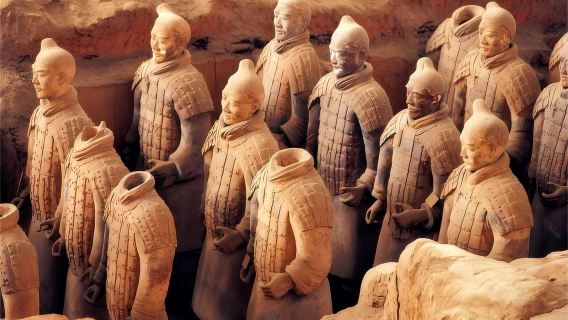
The Terracotta Army of Emperor Qinshihuang is often hailed as the Eighth Wonder of the World. Over a thousand terracotta soldier figures unearthed here, each with unique expressions and lifelike details, represent a brilliant gem in the history of ancient Chinese sculptural art. It is acclaimed as "one of the greatest archaeological discoveries of the 20th century."
Historical background
Emperor Qin Shi Huang began constructing his mausoleum at the age of 13, mobilizing nearly 720,000 laborers over 38 years in this colossal project. The construction remained unfinished at his death and was completed over a year later by his successor, Qin Er Shi (Hu Hai).
Legend has it that Emperor Qin Shi Huang expended countless manpower, material resources, and wealth to construct an underground palace for himself, with the Terracotta Army serving as its guardians.
The Terracotta Warriors are a prime example of using figurines to replace human sacrificial burials. The reason why the Terracotta Army achieved such remarkable scale and lifelike realism was not only due to the craftsmen's ingenuity but also inseparable from the emperor's will.
In March 1974, farmers from Xiyang Village in Lintong District, Shaanxi Province accidentally discovered fragments of pottery figurines while digging a well. After over a year of archaeological exploration and trial excavations, experts confirmed it to be a large-scale figurine pit - now world-renowned as Pit No.1 of the Terracotta Army.
In April and May 1976, Pit 2 and Pit 3 of the Terracotta Army were discovered on either side of Pit 1. Each pit varies in size, shape, and the artifacts unearthed. Some scholars believe that Pit 3 served as the command center for Pits 1 and 2, known in ancient times as the "military tent."
The Emperor Qinshihuang's Mausoleum Site Museum, built on the site of the Terracotta Army burial pits, officially opened in 1979. Its main attractions include Pit 1, Pit 2, and Pit 3 of the Terracotta Warriors, the Bronze Chariots and Horses Exhibition Hall, and related temporary exhibitions.
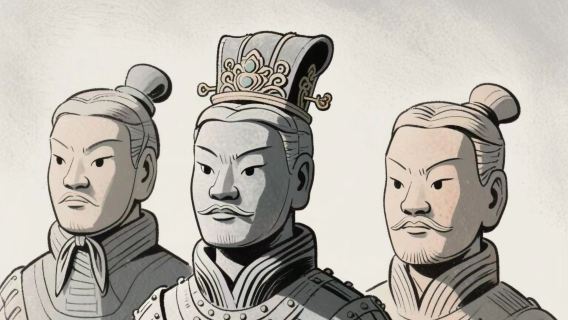
Tour Guide The admission ticket to Emperor Qinshihuang's Mausoleum Site Museum includes access to three Terracotta Army pits (including Pit No.1), the unearthed artifacts exhibition hall, the bronze chariots and horses exhibition hall, and the mausoleum of Emperor Qinshihuang. The unearthed terracotta figures can be categorized into general figures, warrior figures, and charioteer figures based on their attire, expressions, and hairstyles. Each terracotta figure has unique facial features, hairstyles, postures, and expressions. Originally, both the terracotta figures and horses were painted with colorful pigments, but most of the colors have faded or peeled off due to fire damage and water immersion over time.
- Pit No. 1
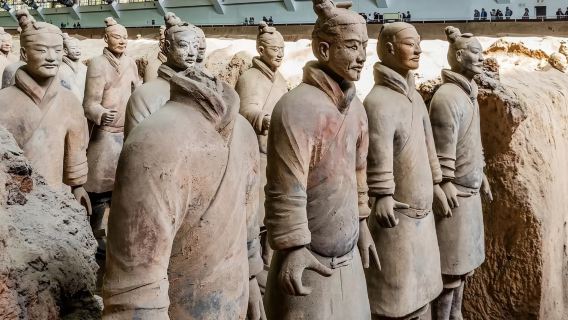
Pit No. 1 in the attraction was one of the earliest excavated. The pit measures approximately 230 meters from east to west and 62 meters from north to south. Based on the density of unearthed terracotta figures and horses during trial excavations, it is estimated that Pit No. 1 contains around 6,000 terracotta warriors and horses, along with a large number of bronze weapons.
Pit No. 1 is the most awe-inspiring exhibition hall currently restored, where you can witness the massive terracotta army standing in the pit with diverse postures. It's said there are over thirty distinct beard styles alone. Upon closer inspection, each soldier appears remarkably lifelike—from their armor and facial expressions to their weapons and even the palm lines—all crafted with astonishing detail.
- Pit No. 2 and Pit No. 3
Pit No. 2 and Pit No. 3 are located on either side of Pit No. 1. Like Pit No. 1, they contain nearly 2,000 life-sized terracotta warriors and horses, including charioteers, cavalry, and infantry arranged in orderly formations. While not as visually striking as Pit No. 1, each pit showcases distinct military formations and purposes, making them equally worth visiting.
The creation of the Terracotta Army was based on real life, featuring exquisite artistic techniques. Each figurine has distinct clothing and facial expressions, showcasing vivid individuality and strong characteristics of its era. Bronze weapons unearthed from the pits include swords, pi spears, lances, dagger-axes, halberds, shu polearms, crossbow triggers, and numerous arrowheads. Remarkably, most weapons remain sharp-edged after over two thousand years, demonstrating highly advanced metallurgical technology of that period.
Travel notice
Emperor Qinshihuang's Mausoleum Site Museum is bustling with visitors every day. To avoid peak hours, you can start your visit from Pit 3 first. After the tour, visitors can take the attraction's shuttle bus to the Mausoleum of the First Qin Emperor.
Show All
opening hours
Open 03/16–11/15 08:30–18:30; Open 11/16–03/15 08:30–18:00
Preferential Policy
Children: Free admission for children aged 16 and under (Chinese nationals) with a valid second-generation Chinese resident ID card or household registration (hukou); applies to non-Chinese nationals under 1.4 meters in height. Free admission children must be accompanied by a parent.
Seniors: 65 years old and above (Chinese citizens), free admission with a valid second-generation Chinese resident ID (reservation required on the attraction's official website or WeChat account).
Visitors with disabilities: Chinese visitors with disabilities can enjoy free admission by presenting a valid ID and making a reservation in advance. For those with severe disabilities (Level 2 or above) requiring assistance, one accompanying person is also granted free admission (reservation must be made in advance on the attraction's official website or WeChat account). Free admission applies.