Special note: First, a successful order booking does not mean the Forbidden City tickets have been successfully secured. Please read the announcement on the Trip.com official website carefully; the supplier needs to secure the tickets again. Second, if the supplier fails to secure tickets, they will notify travelers by phone call or SMS before 22:00 on the day of the ticket-grabbing attempt (generally 7 days before departure), and travelers may cancel without penalty or reschedule for free; please purchase with caution if you have concerns.

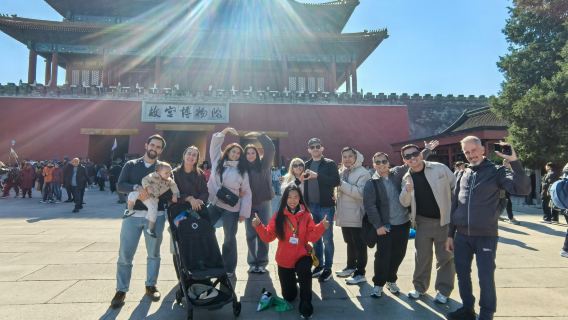
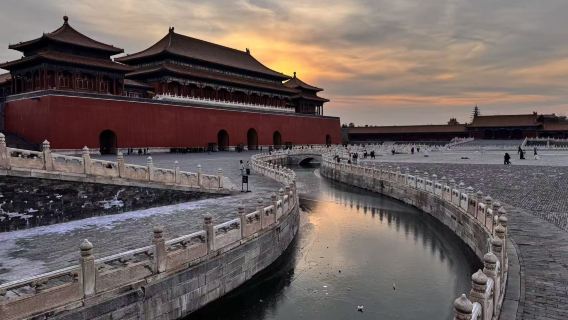
The Palace Museum, also known as the Forbidden City, was the imperial palace of the Ming and Qing dynasties and is a symbol and emblem of ancient China. When you stand within the imposing, orderly high walls and deep courtyards, you can truly feel the glory it once held. Its long history has left this place with a vast array of precious architecture and countless cultural relics.


Tour of ancient architectural complex
The Palace Museum is a relatively well-preserved and large-scale ancient wooden architectural complex in China and the world. These resplendent architectural complexes can be divided into two major parts: the "outer court" and the "inner court." With the Gate of Heavenly Purity as the boundary, the area south of the gate is the outer court, where the emperor handled government affairs, and the area north of the gate is the inner court, where the imperial concubines lived and the emperor's family life took place.


Admire a large number of precious cultural relics
The Palace Museum houses a vast collection of precious cultural relics, estimated at over one million items. These are displayed across multiple galleries categorized by type. Among them, the Treasures Gallery and the Clocks and Watches Gallery are particularly noteworthy, where you can see a variety of uniquely shaped and rare mechanical timepieces collected by the Qing dynasty—sure to be an eye-opening experience.
Travel route
The Palace Museum covers a vast area and has more than 70 palaces of various sizes, with numerous tour routes. To properly explore it, you need to set aside a full day. If you just want a quick look at the main palaces, it takes about two hours to finish the tour.


Classic attractions
The site where emperors held grand ceremonies—the Hall of Supreme Harmony (Taihe Dian)
The Hall of Supreme Harmony (Taihe Dian), commonly known as the "Jinluan Hall," was the site where emperors of the Ming and Qing dynasties held grand ceremonies.
The place where emperors held court—the Hall of Mental Cultivation
The Hall of Mental Cultivation is an "I"-shaped building, divided into front and rear halls. After the reign of Emperor Yongzheng of the Qing Dynasty, the emperor's bedchamber was moved to the rear hall, and the front hall became the place where the emperor handled daily government affairs and received officials.
The magnificent stone bridges in The Palace Museum—the Golden Water Bridges
On the square in front of the Gate of Supreme Harmony, there are five Golden Water Bridges in total, of single-arch design with graceful forms, setting off the magnificent Meridian Gate tower and the resplendent Hall of Supreme Harmony, creating a captivating scene.
The emperor's wedding chamber — Kunning Palace
The Palace of Earthly Tranquility is one of the three rear palaces of the inner court of The Palace Museum in Beijing. During the Ming dynasty, it served as the empress's bedchamber, but in the Qing dynasty it was gradually converted into a place for worshipping the gods.
The venue for the "palace examination" — the Hall of Preserving Harmony
The Hall of Preserving Harmony (Baohe dian) is the essence of traditional Chinese palace architecture and is a hall-style building within The Palace Museum in Beijing. Every New Year's Eve, the emperor hosted banquets here for vassal kings and ministers of ethnic minorities. From the late Qianlong period onward, this site became the venue for the "palace examination."
Peerless treasures of all kinds - Treasures Gallery
Treasures Gallery is located in the Ningshou Palace area and houses an especially rich collection of treasures, covering Buddhist items, ornaments, daily utensils, and rare curios.
Exquisitely shaped clocks and watches of all kinds — Clocks and Watches Gallery
The Clocks and Watches Gallery is located in the Palace of Ancestral Worship within the palace. The timepieces on display are mostly British products, though there are also clocks and watches from other countries such as France and Switzerland.
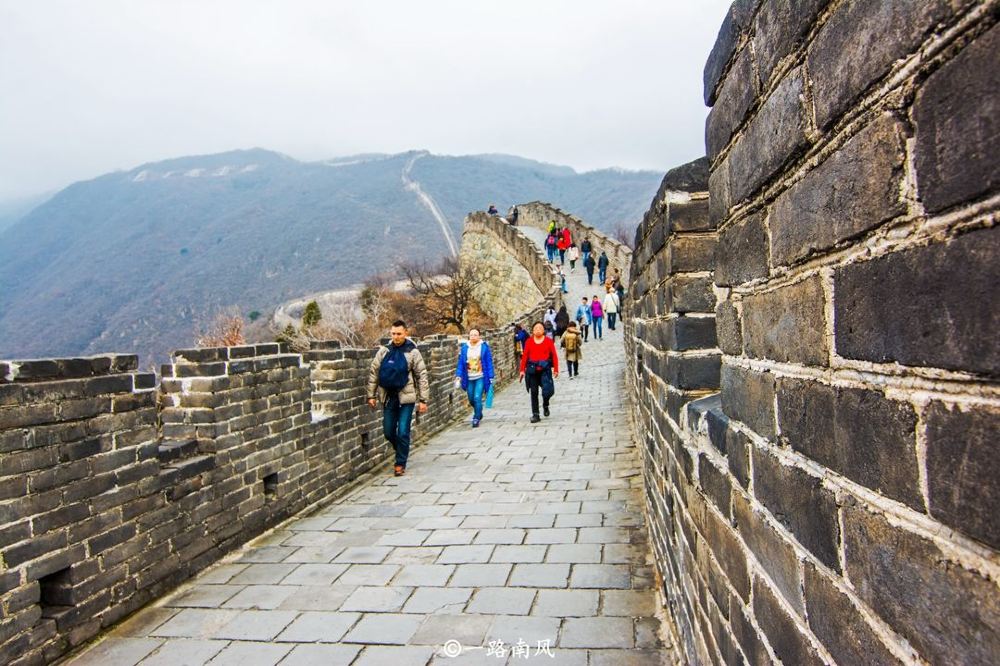
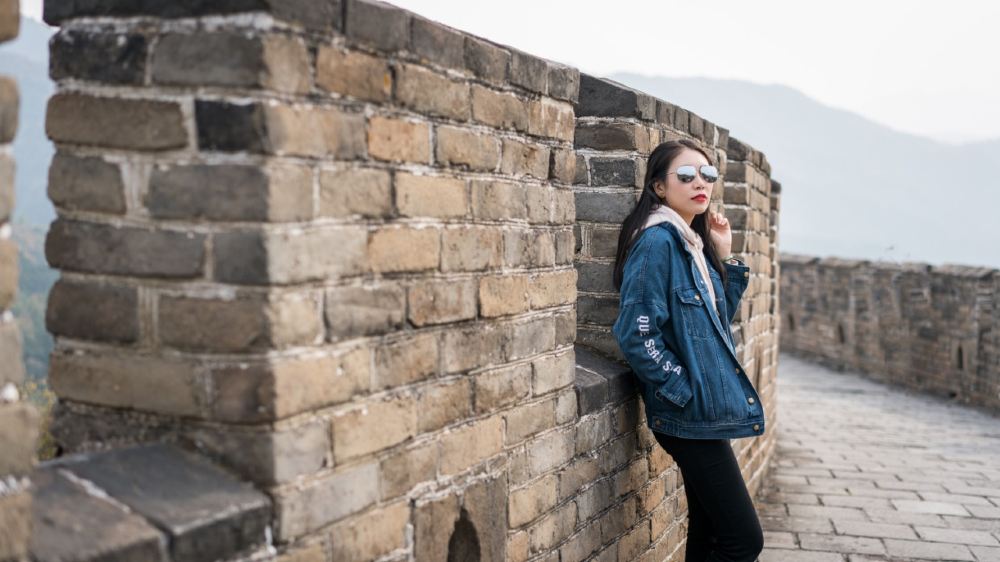
Located within Huairou District, Beijing, the Mutianyu Great Wall connects to the Juyongguan Great Wall to the west and Gubeikou to the east. Since ancient times, it has been a military stronghold guarding Beijing, known as the "precipitous ridge and formidable pass." The Mutianyu Great Wall features a unique architectural style with dense watchtowers, and the Zhengguan Platform, where three watchtowers stand side by side on a single platform, is especially rare among the Great Wall.
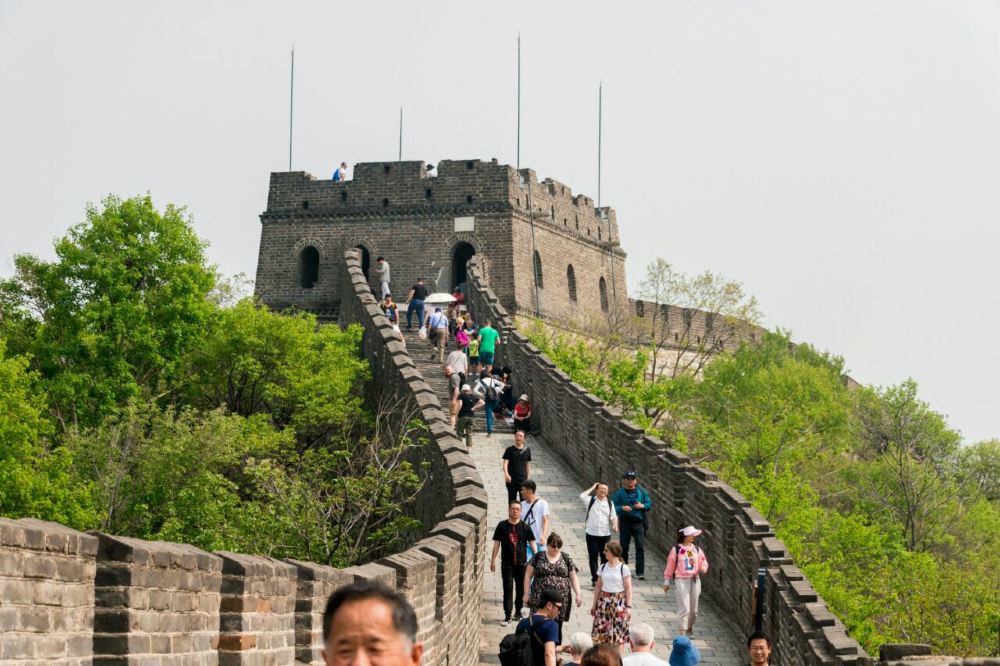
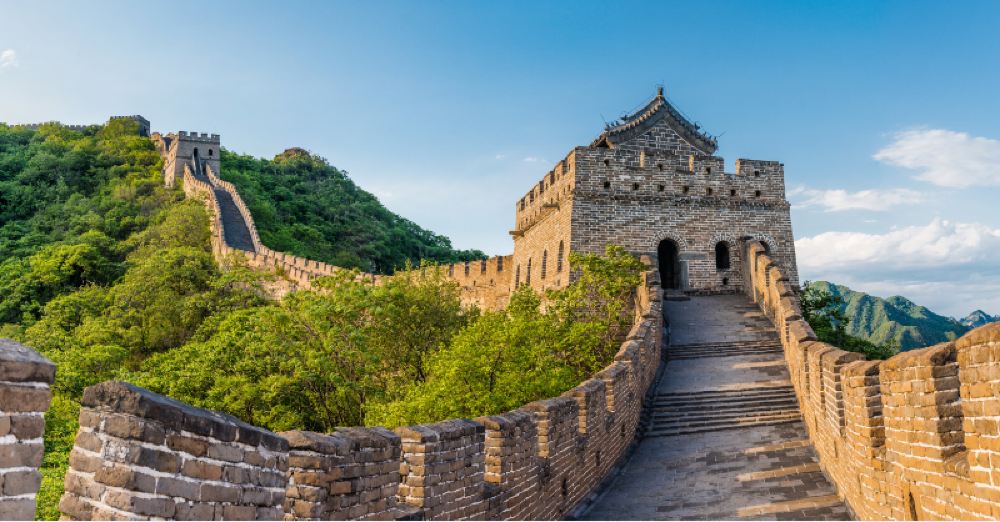
22 enemy towers in close concentration
The Mutianyu Great Wall is mostly built on the steep cliffs on the outer side, following the terrain and using natural hazards to defend against threats. The wall body is seven to eight meters high and four to five meters wide at the top, and the building material is mainly granite, making it majestic and solid. The Mutianyu Great Wall has densely spaced enemy towers; among the currently open 2,250 m section of the wall, there are 22 enemy towers. In particular, within a distance of less than 500 m from Tower 1 (the Big Corner Tower) to Tower 4 (the Zhengguan Platform), there are 4 enemy towers. This dense distribution pattern of enemy towers is something other sections of the Great Wall do not have.
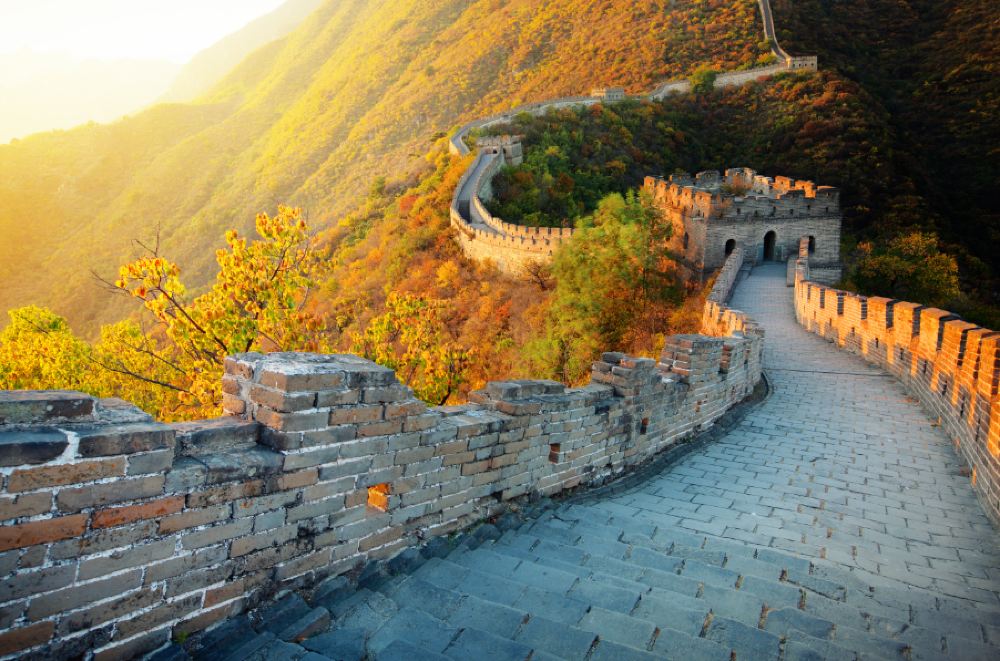
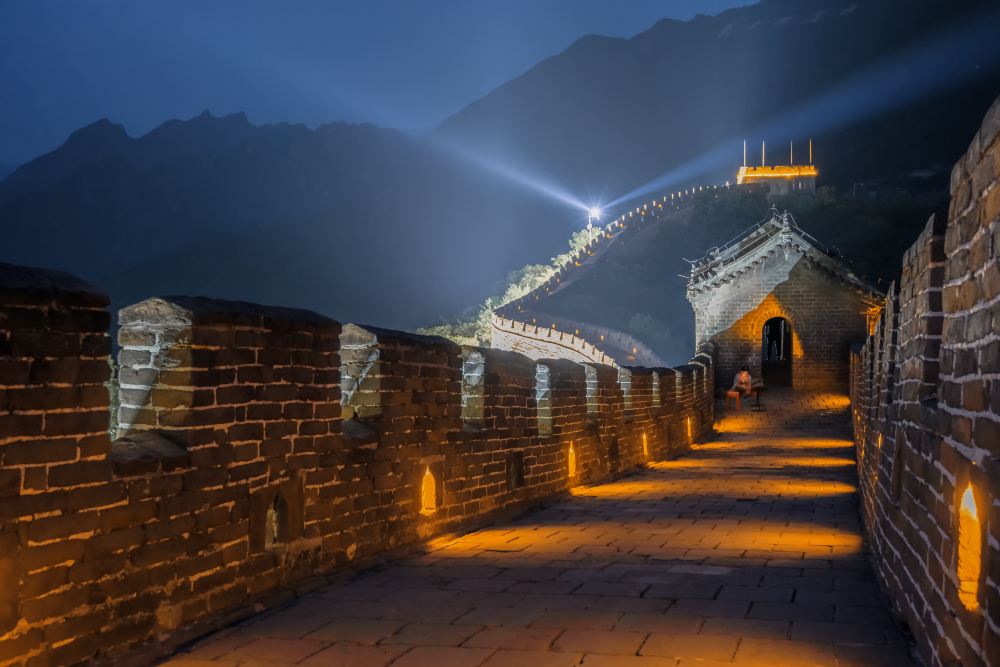
Great Wall hiking route reference
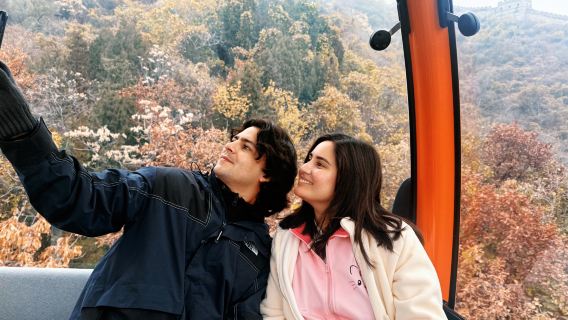
Most visitors hike up to the Great Wall along the walking trails. The attraction has two trails in total, starting from the south and north ticket gates respectively. From the north ticket gate, you can walk up to the Great Wall at Tower 10 and Tower 8; from the south ticket gate, you can walk up to the Great Wall at Tower 8 and Tower 6. The two trails are similar in length, approx. 1500 m each. If you do not want to expend too much energy on the trails, you can choose to take the cableway next to the north ticket gate; its upper station is located near Tower 14.
The currently open section of the Mutianyu Great Wall is approx. 2,250 m long. At the southeast end is Tower 1, the Big Corner Tower of Mutianyu. Heading northwest, you can reach Tower 4 (the Zhengguan Platform) and see the rare structure of three enemy towers standing side by side on one platform. Continuing forward, the wall is relatively gentle and easy to walk, and you can go all the way to Tower 22 at the northwest end. After that, you can take the cable car down from Tower 14.