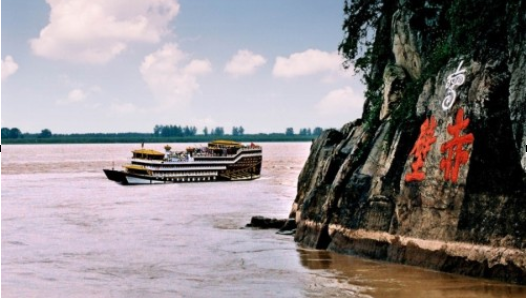
Things to do in Chibi
Explore top experiences
Top 10 attractions in Chibi


Ancient Town of Yangloudong
Yangloudong Ancient Town is located in Yangloudong Village, Zhaoliqiao Town, 26 kilometers southwest of Chibi City. It is a strategic point at the junction of Hunan and Hubei provinces. During the Ming and Qing dynasties, it was one of the six ancient towns of Puqi (now Chibi City). It is the origin of "Songfeng Tea" and is known as the "Hometown of Brick Tea".Chibi · 25.3 km from downtown

Yangloudong Ming and Qing Dynasty Stone Slab Street
Chibi · 25.3 km from downtown

Orange Isle Scenic Area
Orange Isle Scenic Area is a narrow sandbar lying across the heart of the Xiang River in Changsha, stretching approx. five km. It faces Yuelu Mountain to the west and borders Changsha's old city to the east, surrounded by water on all sides. Named after the abundant orange trees planted on the isle, it was historically called Shuiluzhou. Formed by river alluvium, this sandbar has existed for over a millennium, where the "River and sky in evening snow" scenery was once among the Eight Views of Xiaoxiang. In 1925, the poem "Spring in a pleasure garden - Changsha" was composed here, with its iconic line "Alone I stand in the biting fall, watching the Xiang River flow north past Orange Isle's head," which made this riverine landmark widely renowned. The highlights of the visit are concentrated at the islet's head: A granite art sculpture over 30 m tall, modeled after the 1925 youth image, stands facing the river as Changsha's highly recognizable landmark. Nearby, the Questioning Heaven Platform extends toward the river center, where leaning on the railing reveals the mighty Xiang River flowing northward, with Yuelu Mountain and the city skylines on both banks facing each other across the water. The Songju Pavilion, white marble poetry stele, and the 200-year-old ancient phoenix tree at the islet head are all in this area. Heading north from the islet head, a hundred-acre orange orchard bears golden fruits in fall, while bamboo groves, peach orchards, plum gardens, and osmanthus groves take turns showcasing seasonal flora. The historic Zhuzhang Ferry (where Zhu Xi and Zhang Shi once crossed the Xiang River for lectures) and the Huxiang Culture Exhibition Hall are scattered along the way. At the islet's tail, the reconstructed Jiangshen Temple and Gongji Tower area was precisely where ancients admired the "River and sky in evening snow" scenery. The island is long and narrow, making round-trip walks quite tiring. A sightseeing train is available for transportation, with multiple stops along the way for hopping on and off. Travelers with limited time are advised to head straight to the island's tip to see the sculpture and river views, then stroll leisurely along the riverside path. At dusk, watching the sunset over the Xiang River and seeing the lights gradually illuminate both shores from the island's tip is especially worth setting aside time for.China · Changsha

Hunan Museum
Hunan Museum has a rich collection of cultural relics, especially of those from the Mawangdui Han Dynasty Tombs. The Mawangdui Han Dynasty Tombs Exhibition is a permanent exhibit at Hunan Museum. It features thin-as-cicada-wing plain yarn garments, undamaged printed cotton gowns, all kinds of exquisite embroidery, brightly painted lacquer wares, delicate and detailed paintings, and so on.China · Changsha

Chibi Museum
The Chibi City Museum is affiliated to the Chibi City Cultural Relics Bureau. It was built on January 1, 2002 on the beautiful Lushui River. The building area of the building is 3400 square meters, of which the exhibition hall area is 2800 square meters and the warehouse area is 600 square meters.Chibi · 905m from downtown

Hubei Provincial Museum
The Hubei Museum is composed of three antique buildings, including a comprehensive exhibition hall, a Chu Culture Hall, and a bell museum. The layout reflects the ancient Chu architectural concept of "One Hall" and "Multiple Stations". The Hubei Museum boasts four treasures: the Zeng Houyi Chime Bells unearthed in the Tomb of Marquis Yi of Zeng; the exquisite workmanship of the cold weapon era, the King of Yue's Sword of Goujian, the 1 million year-old Xunxian Man Skull Fossil, and the White and Blue Porcelain Plum Vase.China · Wuhan

Qingchuan Pavilion
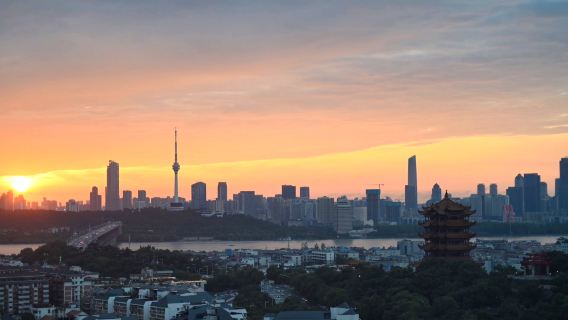
Qingchuan Pavilion is located on Hanyang's Tortoise Mountain and faces the Yangtze River, across the river from the Yellow Crane Tower. Qingchuan Pavilion was built in the Ming Dynasty and was named after the Tang Dynasty poet Cui Wei. The pavilion as it exists today was rebuilt in the 1980s according to historical photos. The scenic area consists of three main buildings: Qingchuan Pavilion, Wuhan Dayu's Palace, and Tiemenguan. There are also a number of other attractions such as various stone tablets and monuments, decorated archways, and cloisters, all rich in classical Chinese charm. It is very pleasant to climb up to the pavilion, feel the wind from the river, and enjoy the view of the river. The classical architecture and the greenery here complement each other perfectly, and the beautiful scenery has caused this to become a popular spot for wedding pictures in Wuhan.Wuhan · 99.5 km from Chibi

Mount Yuelu
Mount Yuelu stands on the west bank of the Xiang River and is a landmark mountain in Changsha. At its foot lies the Yuelu Academy, founded during the Northern Song Dynasty, a millennium-old institution sharing the mountain's name. Ascending from here leads to Qingfeng Gorge, where the Aiwan Pavilion, named after Du Mu's poetic line "I stop my carriage to admire the maple woods at dusk," is surrounded by maple trees. Midway up the mountain, the ancient Lushan Temple, established in the Western Jin Dynasty over 1,700 years ago, features a lush six-dynasty-era podocarpus tree in front of its sutra repository. At the summit stands the Yunlu Palace, a Taoist temple built during the Ming Dynasty, offering panoramic views of the Xiang River and Changsha's urban area. The mountain's historical sites extend further, with the Yu King Stele, Python Cave, and Changsha Battle Memorial Stele scattered along its trails. Modern figures such as Huang Xing, Cai E, and Chen Tianhua are also buried here, making the mountain a condensed repository of profound modern history. Most cultural attractions are concentrated near the south gate, where you can visit major historic sites in sequence from Yuelu Academy to Aiwan Pavilion. For those preferring not to hike, a cableway station near the east gate allows easy ascent, eliminating most uphill climbing. With an elevation of about 300 m and well-developed trails, reaching the summit on foot is manageable. Ancient trees like Jin dynasty podocarps, Tang dynasty ginkgos, Song-Yuan era camphor trees, and Ming-Qing maple-chestnuts line the paths, making the entire mountain resemble a natural botanical museum. In late fall when maple leaves turn red across the slopes, it becomes an ideal time for hiking. Allocate half a day to leisurely photograph Aiwan Pavilion and the mountaintop viewpoints.China · Changsha

Gexian Mountain
Gexian Mountain is located in Zhongping Village, Guantangyi Town, Chibi City, with an altitude of 642.7 meters and an area of 6 square kilometers. It is 18 kilometers away from the Xingxing Bamboo Sea in Xianning in the east. There is a highway running through the Tiancheng District, which is adjacent to Chongyang in the south. It is named after Ge Hong, a famous chemist and medical scientist in Jin Dynasty, who once practiced Taoism here. According to Kangxi's "Puqi County Chronicle" in the Qing Dynasty, and Qianlong's "Puqi County Chronicle" recorded that "the place where Gexian's emergence in Jin Dynasty is located is Gexian Mountain, ten miles south of the maid...". Gexian Mountain Monastery is a place to commemorate Ge Hong, a famous chemist, medical scientist and Taoist theorist in Jin Dynasty, who cultivated here and became immortal. It was built without examination. According to the records of the stele, it was rebuilt during the Daoguang period of the Qing Dynasty. The statue of Ge Xian holding pills and pills in his hand is about 2 meters high. There is a Taiji map on the top of the courtyard door, and a stone carving on the door couplet that says "The peak of herbal medicine is still alive. , the traces of the burnt Danjing still exist." Outside the hospital, there is a stone tablet of merit and virtue of "Raising the Quartet". The peak in the east of the mountain is Ge Xian's ascension place. There is a round stone house with four stone statues of Ge Xian and his disciples inside. There are stone couplets inside and outside the round gate, which say "Extraordinary pills for changing bones. There is a 40-square-meter flat ground in front of the stone house, and there is a stone incense burner and a stone remnant plaque of "Gexian Mountain" on the side. The plaque contains the words "Repair in the Qing Dynasty".Chongyang · 18.7 km from Chibi

Jiangxi Provincial Museum
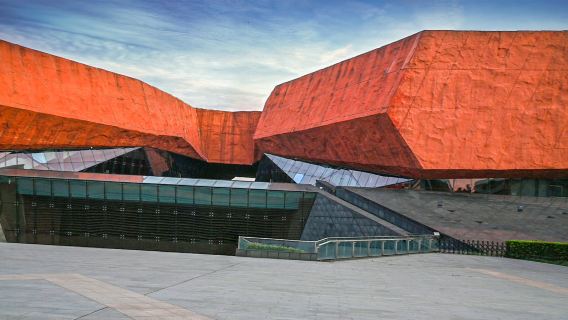
Jiangxi Provincial Museum is located in Xinzhou on the Lancang River in Nanchang City. It is surrounded by Fuhe River in the east, Zhongshan Bridge in the south, Lijiang River in the west and Tengwang Pavilion in the north. The environment is beautiful. The main building is made of the white porcelain three-tube excavated from Jingdezhen Yuyao in the Ming Dynasty. The museum, the revolution hall and the natural museum are all in one. The ancient ceramic art and modern architectural style are ingeniously integrated into one, solemn and elegant, unique.China · Nanchang
Experiences you can't miss in Chibi
Featured Food & drink in Chibi
View all Food & drink
Free cancellation
Book now for tomorrow
From€50.31

Free cancellation
Instant confirmation
Book now for tomorrow
From€55.24
5% off
Limited-time sale
From€72.70€76.53
From€91.79
Featured Day tours in Chibi
View all Day tours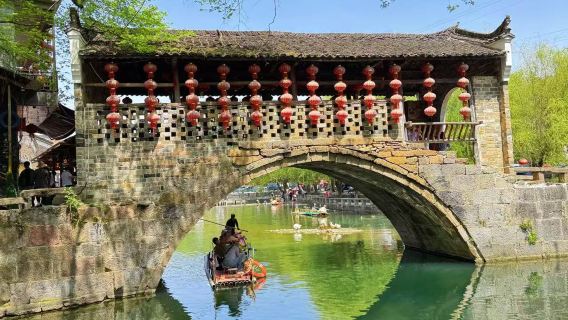

From€70.27
5.0/5
· 1 review· 51 bookedFree cancellation
From€66.41
Free cancellation
Book now for tomorrow
5% off
Limited-time sale
From€145.33€152.98
From€84.51
Featured Cultural experiences in Chibi
View all Cultural experiences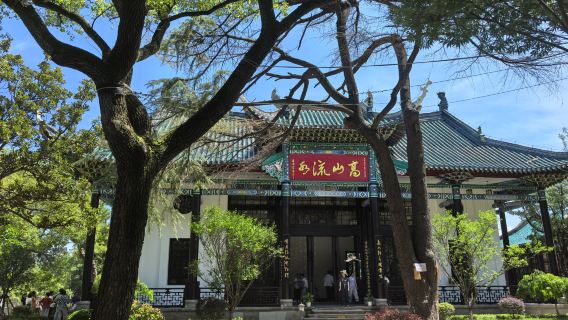
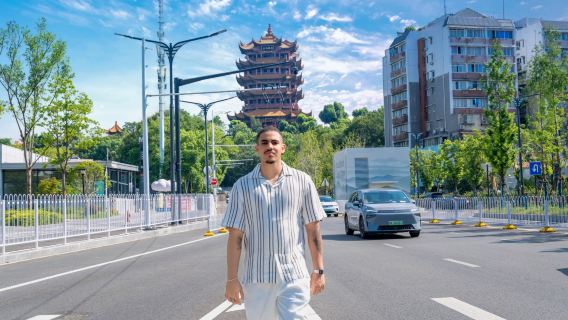
From€145.63
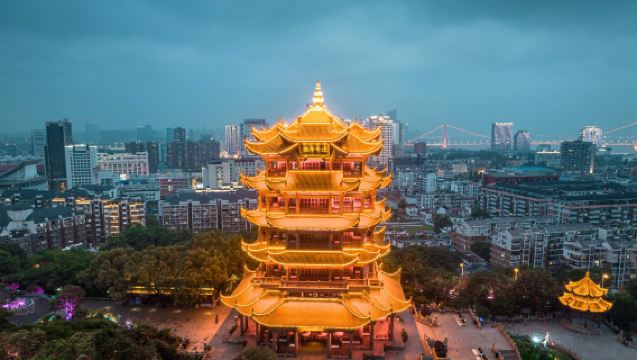
From€145.07
![Wuhan [Yellow Crane Tower + Hubei Provincial Museum + Donghu Luoyan Scenic Area + Yangtze River night cruise]](https://ak-d.tripcdn.com/images/0355j12000t7bjfv049F0_C_568_320.png?_fr=wc)
From€433.86
Free things to do in Chibi
Ancient Town of Yangloudong
Chibi · 25.3 km from downtownYangloudong Ming and Qing Dynasty Stone Slab Street
Chibi · 25.3 km from downtownOrange Isle Scenic Area
China · ChangshaHunan Museum
China · ChangshaChibi Museum
Chibi · 905m from downtownHubei Provincial Museum
China · WuhanImmediate access, Book now for today, Cancel anytimeQingchuan Pavilion
Wuhan · 99.5 km from ChibiImmediate access, Book now for today, Cancel anytimeMount Yuelu
China · ChangshaGexian Mountain
Chongyang · 18.7 km from ChibiJiangxi Provincial Museum
China · Nanchang
What travelers say about Chibi

时光漫游者May 18, 2025
5.0
The following is an evaluation of Yangloudong Ancient Town:
History and Culture
🔷Long history: Yangloudong Ancient Town has a history of over a thousand years. It is the origin of "Songfeng Tea" and "Dong Tea", the birthplace of Hubei Laoqing Tea, and is also the "No. 1 Ancient Town in the World's Tea Industry" and "Hometown of Chinese Brick Tea". Tea has been planted and processed since the Taihe period of the Tang Dynasty. The Ancient Tea Horse Road was formed in the Song Dynasty. It reached its peak in the Ming and Qing Dynasties. At its peak, there were more than 200 tea houses and a population of nearly 40,000. It was known as "Little Hankou". It is one of the starting points of the Tea Road and has witnessed the rise and fall of China's tea trade. It has a profound historical and cultural heritage.
🔷Cultural integration: The ancient town integrates a variety of cultural elements such as tea culture, religious culture, and architectural culture. In terms of tea culture, there are many tea shops and teahouses, where you can taste authentic green brick tea and learn about the production process of brick tea; in terms of religious culture, there are ancient temples such as Yuantong Temple, with unique architectural styles. The carvings and murals in the temple tell the stories of the years; in terms of architectural culture, most of the buildings on both sides of the ancient street are from the Ming and Qing Dynasties, two-story buildings, brick walls and wooden doors, carved window lattices, and simple and elegant styles. Walking on the ancient street, it seems to be able to travel back to ancient times.
Architectural landscape
🔶Ancient street style: The main street is 4 meters wide and 2,200 meters long. It is paved with bluestone. There are more than an inch deep grooves on the stone road that were crushed by the "chicken bus" for transporting tea, which is a witness to the prosperity of commerce. There are many shops on both sides of the ancient street. Although it has gone through the years, you can still see the prosperity of the year. Now it has been restored to its original state and the street has been opened, recreating the production and trading scenes of the time.
🔶Special buildings: There are display shops such as the Lijin Bureau, the Post Office, the Yanglou Academy, the Hecha Gang, the Guangjitang Pharmacy, the Fuchang Tea House, and the Xintai Tea Factory, as well as relatively well-preserved Hui-style ancient buildings such as the Lei Family Courtyard, with white walls and black tiles, towering horse-head walls, and carved beams and painted buildings at the gate, showing the richness of the Qing Dynasty architectural culture.
Tourism experience
◼️ Tour route: You can stroll along the bluestone road from the entrance of the ancient town, appreciate the buildings and shops on both sides of the ancient street, and feel the tranquility and simplicity of the ancient town; visit Guanyinquan and Yuantong Temple to experience the religious culture of the ancient town; you can also go to the Green Brick Tea History Museum to learn about the development of Yangloudong's tea culture and production technology; if you have enough time, the surrounding Zhongsongshan Tea Garden is also a good place to get close to nature and feel the scenery of the tea garden.
🔺 Food recommendation: In addition to tasting authentic green brick tea, the ancient town also has special foods such as Jiangjia Noodle House, which can satisfy tourists' taste buds while playing.
🏠Accommodation options: There are homestays such as Qingshi Inn in the ancient town, which have unique decoration styles and allow tourists to experience a different accommodation experience. The price is also relatively moderate.
Current situation and development
🔶 Protection and development: The local government attaches great importance to the protection and development of the ancient town, and has carried out restoration work to restore the old as it was. At the same time, it is also constantly improving tourism supporting facilities and improving the quality of tourism services. For example, it has introduced many Internet celebrity check-in shops such as talk show beer bar, Wu Di Yi Photo Studio, and Ming Juan Second-hand Bookstore, realizing the integration of traditional culture and modern tourism style, creating a strong Chinese style and fashion trend.
🔶 Ecological governance: The advancement of the Yangloudonggang small watershed comprehensive governance pilot project has improved the ecological environment of the ancient town, laid the foundation for the sustainable development of the ancient town, and made the ancient town
Ancient Town of Yangloudong

印第安人老斑鸠August 23, 2024
5.0
Very good for leisure running, very quiet and not many people
Yangloudong Ming and Qing Dynasty Stone Slab Street

Anonymous userOctober 8, 2026
5.0
There were no assigned seats, so you could sit anywhere. We spent most of our time on the third deck enjoying the view and taking photos. Although it was very hot outside, there was a breeze on both sides of the deck, so it wasn't too bad. There were karaoke machines and vendors selling snacks and drinks on both the second and third decks. The air conditioning on the second deck was very strong. We arrived at the pier half an hour early, and there was already a queue.
Orange Isle Scenic Area
Anonymous userOctober 9, 2026
5.0
Since we couldn't book through the official website, we chose this option. Entry was smooth, and the guide even led us into a classroom for a brief explanation before the tour. The explanation was very detailed and thorough. Even with many people inside, the guide repeatedly checked the number of people and led the group. Overall, they were very dedicated and responsible, and we learned a lot from the guide – definitely worth the visit.
Hunan Museum

大土豆一颗October 4, 2026
5.0
The exhibited artifacts were quite good; I've also been to joint exhibitions organized by museums like the Hunan Provincial Museum. The Kremlin artifacts here are well-prepared and thoughtfully designed. However, the souvenir and merchandise section was rather boring. I was thinking of buying a pendant or something, but that saved me some money.
Hubei Provincial Museum

沅大王September 30, 2026
5.0
The scenic area is filled with the fragrance of osmanthus blossoms. From the top, you can enjoy panoramic views of the Yangtze River Bridge and the Yellow Crane Tower. At the very top, watching the ships on the Yangtze and the cars and trains on the bridge, with the breeze blowing, is very pleasant, and it's not too crowded. The scenic area isn't large; a leisurely hour is about right to appreciate the scenery.
Qingchuan Pavilion and Guishan Scenic Area are directly connected by the Iron Gate Pass, which leads to the West Gate of Guishan. Climbing the mountain and enjoying the breeze and osmanthus fragrance is a wonderful experience.
Qingchuan Pavilion

118***58October 5, 2026
5.0
During the National Day holiday, the crowds were immense. Our tour guide, Xiao Xiang, led us along the way, providing lively and engaging explanations that saved us from taking unnecessary detours and greatly improved efficiency. He also clearly outlined the key locations.
Mount Yuelu

M88***34February 19, 2025
5.0
The scenic area has convenient transportation, the plum blossoms are great, and the service is also very good
Gexian Mountain

M48***28October 8, 2026
5.0
Excellent museum tour! Professor Deng Wei's explanations were insightful and easy to understand, vivid and engaging. His descriptions of history, culture, and artifacts were very accurate and detailed, demonstrating his in-depth research and profound insights! Thank you so much! Moreover, Professor Deng is a very approachable and incredibly eloquent gentleman!
Jiangxi Provincial Museum


