https://ph.trip.com/moments/destination-jinxi-2405/
2025 Jinxi Travel Guide: Must-see attractions, popular food, hotels, transportation routes (updated in December)
Jinxi Today's weather
Clear 7-16℃
All Trip Moments about Jinxi
I specially took a trip to Jiangxi to shoot this set of photos
and was truly amazed by Jiangxi❗️These days I’ve been waking up in a fairyland every day✨ Save this hidden gem travel guide👌 🚗 Suggested itinerary: D1 Gexian Village + Night Tour D2 Wunvzhou Island + Night Tour D3 Zhuqiao Ancient Village - Yingtan Museum D4 Wenchangli - Opera Museum - "Dreaming of the Peony Pavilion" 📍Gexian Village (Photos 1-4) A misty mountain and water secret realm🍃 Recommended to stay one night in a homestay inside the scenic area The deserted ancient village in the early morning looks like an ink painting At night 🈶 intangible cultural heritage🔥 fire pot and other performances The final sky lantern 🏮 release is stunningly beautiful and speechless 📍Wunvzhou Island (Photos 8-10) The ultimate romance of Huizhou-style water town❗️ Rowing boats shuttle between white walls and black tiles Afternoon tea at a riverside teahouse is perfect for photos The night view is breathtaking! Golden pavilions reflected in the water Don’t miss the iron flower✨ and drone show 📍Wenchangli (Photos 5-7, 14-16) Bluestone paths + century-old shops Great photo spots at the Opera Museum 🤳 Must-see performance of "Dreaming of the Peony Pavilion" 🎭 Water curtain light and shadow + live acting is heartbreakingly beautiful 📍Zhuqiao Ancient Village (Photos 11-13) A 600-year-old pristine ancient village No commercialization, villagers still live there Walking through cobblestone alleys feels like time travel You can also experience intangible cultural heritage 📖 woodblock printing 📍Yingtan City Museum (Photos 17, 18) A unique Taoist culture exhibition You can also touch Yingtan’s thousand-year history From ancient 🪨 to modern times It helps you understand Yingtan all at once The beauty of Jiangxi is poetry scattered among the mountains and waters, and songs flowing through ancient towns. This journey feels like traveling inside a painting, every frame worth collecting💖Aiden456 Scott30Not Wuyuan, not Jingdezhen! This underrated city in Jiangxi is a true treasure|Fall in love at first sight
✅ Fuzhou|A cultural capital full of talents Northern Song Dynasty thinker Wang Anshi, great prose writer Zeng Gong, lyric giants Yan Shu and Yan Jidao, Southern Song philosopher Lu Jiuyuan, Ming Dynasty playwright Tang Xianzu, and many others are all from Fuzhou. We have never met them, but their words and names are so familiar—from textbooks to popular tales. Walking the streets of Fuzhou today, perhaps the stone paths beneath your feet were once walked by these literary masters! ✅ Fuzhou|Old City Museum Strolling through Wenchangli, you will find the streets and alleys filled with the dreamlike longing of "The Peony Pavilion." Even more enchanting are the various intangible cultural heritage shops: Jinxi bamboo weaving, Lichuan ceramics, wood carving skills, colorful knotting, and the stories of the Chinese Opera Museum’s Liyuan. Wander casually and you might unexpectedly encounter Yulong Wanshou Palace, Wenchang Bridge, Zhengjue Temple, the Catholic Church, Xiaoyi Bridge, and more. Their stories grow richer and more vivid with the flourishing culture. It’s worth noting that Fuzhou is neither rushed nor lax; it develops steadily at its own pace. Many traditional crafts may not be as flashy as modern art, but they carry a gentle warmth and depth shaped by the passage of time. ✅ Fuzhou|Dreaming of The Peony Pavilion As the hometown of Tang Xianzu, Fuzhou never lacks romance and deep affection. At night, as the lights come on in Wenchangli, an immersive performance of "Dreaming of The Peony Pavilion" begins. Being there, feelings arise unknowingly and run deep. While many cities offer immersive performances, the unique experience of "The Peony Pavilion" can only be truly understood in Fuzhou, where the tragic love story between the official’s daughter Du Liniang and scholar Liu Mengmei unfolds. ✅ Fuzhou|Zhuqiao Ancient Village This is an ancient village founded at the end of the Yuan and beginning of the Ming Dynasty, mainly featuring Gan-style architecture. The village is not very large but has several winding alleys. There are also a few crescent-shaped ponds that at first glance resemble the Moon Pond in Hongcun, Huangshan. The nationally recognized intangible cultural heritage of woodblock printing is hidden here, with two ancient woodblock printing workshop sites preserved within the village. If you come here, try experiencing the joy of woodblock printing yourself. When sunlight filters through the pomelo trees in the courtyard and the breeze stirs, the faint fragrance blends with the scent of ink on the desk, instantly immersing you in the moment, unable to pull away. —————————————— The first time I came to Fuzhou, I visited the places mentioned above. My initial visit left a deep impression, and this Jiangxi intangible cultural heritage trip (which also included Wuyuan, Yanshan, Yingtan, and other places) gave me a new understanding of Jiangxi (to be shared in another post). As for Fuzhou, I had long heard of the romance of "The Peony Pavilion," and the classic line "feelings arise unknowingly and run deep" had deeply imprinted itself in my heart at some unknown time. But I had no sensory impression of Fuzhou, the place where it all happened. Until this time, from Zhuqiao Ancient Village to Wenchangli, Fuzhou allowed me to find a sense of peace and cultural belonging amid the hustle and bustle of modern life. Often, in an unexpected moment, I would seek the sound of pine winds and crane shadows in my inner world, listening to the birdsong and fragrance of the green mountains and clear waters. This is probably the charm of a cultural capital (a hometown of talented scholars). It may be low-key, but once you get close, you will "feelings arise unknowingly and run deep."Charlotte Cooper Rose-79Traveling with kids in Fuzhou! 24-hour full guide to the hometown of talents, ancient village drifting
💡【Family-friendly itinerary】 ☀️ Daytime: Learn at Wang Anshi Memorial Hall → Stroll and eat at Wenchangli Old Street → Take photos at St. Joseph's Cathedral 🌙 Night: Night tour of Fu River to enjoy lanterns → Watch the live performance of Dreaming of the Peony Pavilion 📸【Must-visit spots for families】 1️⃣ Wenchangli Historical and Cultural Street 🔸Keywords: Ancient style street photography | Feeding pigeons | Affordable snacks Bluestone paths with Ming and Qing dynasty architecture, dressing kids in Hanfu for photos is super atmospheric~ Beautiful at dusk when the lights come on, 5 yuan pigeon feed makes kids happy interacting with pigeons, lotus silk candy and Jinxi honey tangerines starting at 10 yuan are perfect souvenirs for kids. 2️⃣ Dreaming of the Peony Pavilion live performance 🔸Tips: Arrive 1 hour early to secure seats! After ticket check at 7 PM, head straight to the "Jing Meng" water stage 360° rotating viewing for immersive experience, laser projections + live flying actors tell a love story. Although it’s a romance theme, kids will be attracted by the dazzling scenes~ Wear sneakers to follow scene changes, VIP area offers clearer views. 3️⃣ Dajue Mountain Rafting 🔸Hidden fun: Take the cable car to the top + walk the glass skywalk The 3-hour rafting with 26 bends is thrilling and kids will scream with excitement! Buy the 15 yuan waterproof phone pouch at the foot of the mountain, then walk the glass bridge at the top and take great family photos with a wide-angle lens. 4️⃣ Liukeng Ancient Village 🔸Photo spots: Champion Tower carved windows / Dragon Lake reflections This thousand-year-old village hides 31 Ming and Qing ancestral halls. Spend 20 yuan on a guide to tell kids the story of the "civil and military champions." The old tea shop at the village entrance sells wild honeysuckle tea for 5 yuan, perfect for cooling down with kids. 🍜【Family food highlights and warnings】 ✅ Rice noodles + beef offal (8 yuan per person): Famous old shop on Huancheng South Road, very fragrant, add pickled vegetables and tiger skin eggs, kids can eat a big bowl ✅ Linchuan lotus silk candy: "Xu Ji" at Wenchangli pulls sugar strands fresh, crispy and not sticky, great and safe snack for kids ❌ Scenic area bamboo tube milk tea: 15 yuan a cup is not worth it, 3 yuan mung bean soup is more refreshing and kids love it too 🏡【Accommodation tips】 ▪️ Convenient for night tours: "Chenyin Xiaozhu Inn" near Wenchangli, ancient style loft rooms, about 80 yuan per person, staying with kids lets you feel the old street atmosphere ▪️ Best for rafting fans: Hotels inside Dajue Mountain Scenic Area, book 3 days in advance to get VIP rafting access, no queues with kids, very worry-free 💌【Family travel advice】 ❶ St. Joseph's Cathedral opens every Sunday, dress kids in solid colors for cleaner, prettier photos ❷ Tang Xianzu Memorial Hall offers opera makeup experience (198 yuan including photography), dress kids in costumes for a memorable photo set ❸ Choose the 7:30 PM Fu River cruise, the light show on both banks reflects on the water, kids will be super excited 📌【Hidden gem】 Jinxi Bamboo Bridge Ancient Village has free intangible cultural heritage iron flower show every Saturday at 8 PM! Get front-row seats early with kids, the iron flower bloom is dazzling and kids will be amazed~ 📍Location: Fuzhou City, Jiangxi Province 💰Cost: 600 yuan/2 days (including show tickets, excellent value for family travel)Pami 3480224h Fun with Kids in Fuzhou! Unique Talents' Hometown Experiences + Amazing Live Performances
💡【Family Itinerary】 ☀️ Daytime: Take beautiful photos at St. Joseph's Cathedral → Explore and eat at Wenchangli Old Street → Learn at Wang Anshi Memorial Hall 🌙 Night: Watch the live performance of Dreaming of the Peony Pavilion → Night tour of Fu River to see the lights 📸【Must-Visit Family Spots】 1️⃣ Wenchangli Historical and Cultural Street 🔸Keywords: Ancient-style photos | Feeding pigeons | Affordable snacks Ming and Qing dynasty architecture is perfect for kids to wear Hanfu and take photos! The evening lighting creates a great atmosphere. Buy pigeon feed for 5 yuan to let kids interact with pigeons, and you can also buy lotus root silk candy or Jinxi honey tangerines as souvenirs starting at 10 yuan. 2️⃣ Dreaming of the Peony Pavilion Live Performance 🔸Tips: Reserve seats 1 hour in advance! After ticket check at 7 PM, rush to the "Jingmeng" water stage The 360° rotating viewing area is stunning, with laser projections and live flying actors telling the story. Kids will be fascinated~ Wear sneakers for fun scene changes with the actors. VIP seats offer a clearer view. 3️⃣ Dajue Mountain Rafting 🔸Hidden experience: Take the cable car to the top + walk the skywalk Asia’s longest rafting lasts 3 hours with 26 thrilling bends! Buy a waterproof phone pouch for 15 yuan at the mountain base. After reaching the top with kids, walk the glass bridge and use a wide-angle lens for great group photos. 4️⃣ Liukeng Ancient Village 🔸Photo spots: Zhuangyuan Tower carved windows / Longhu reflections This thousand-year-old village has 31 Ming and Qing ancestral halls. Spend 20 yuan to hire a guide to tell kids the story of the "Civil and Military Top Scholars." At the village entrance, an old tea shop sells wild honeysuckle tea for 5 yuan, perfect for cooling down and relaxing. 🍜【Family Food Highlights and Warnings】 ✅ Rice noodles + beef offal (8 yuan per person): Authentic old brand on Huancheng South Road, kids love it with pickled vegetables and tiger skin eggs ✅ Linchuan lotus root silk candy: "Xu Ji" freshly pulled candy at Wenchangli, crispy and not sticky, perfect as kids’ snacks ❌ Scenic area bamboo tube milk tea: 15 yuan per cup is not cost-effective; better to buy 3 yuan mung bean soup, which is refreshing and affordable 🏡【Accommodation Tips】 ▪️For convenient night tours: Choose "Chenyin Xiaozhu Inn" near Wenchangli, with ancient-style loft design, about 80 yuan per person, very atmospheric for staying with kids ▪️For easier rafting: Stay at hotels inside Dajue Mountain Scenic Area; booking early includes VIP rafting access, no need to queue, saving time 💌【Tips for Traveling with Kids】 ❶ St. Joseph's Cathedral is open every Sunday; dress kids in solid colors for better photos ❷ Tang Xianzu Memorial Hall offers opera makeup experience (198 yuan including photography); dressing kids in opera costumes for photos is very memorable ❸ Choose the 7:30 PM Fu River cruise; the light show on both banks reflects on the water, kids will love it 📌【Hidden Bonus】 Jinxi Bamboo Bridge Ancient Village has intangible cultural heritage iron flower performances every Saturday! Starts at 8 PM, free to watch. Bring kids early to get front-row seats; the dazzling iron flowers are spectacular~ 📍Location: Fuzhou City, Jiangxi Province 💰Cost: 600 yuan/2 days (including show tickets, very cost-effective for family trips)ThunderstormEternityBreathtakingly Beautiful! The Only Ancient Bridge in China "Covered Entirely with Porcelain Tiles"
Breathtakingly Beautiful! The Only Ancient Bridge in China "Covered Entirely with Porcelain Tiles" Among the ancient stone bridges still existing nationwide, there is only one "entirely decorated with porcelain tiles"—the Ancient Bridge on Shupu Street in Huwan, Fuzhou, Jiangxi Province. At first sight, the colorful porcelain tiles covering the entire bridge can leave all visitors speechless instantly. 🍶 Historical Background - Huwan was the "Book Town of Jiangnan" during the Ming and Qing dynasties, with over a hundred bookstores at its peak. The ancient bridge was a necessary passage for book merchants transporting books. - The bridge was originally built during the Qianlong period of the Qing dynasty, funded by local book merchants: since Huwan produced thin porcelain tiles, craftsmen used discarded colorful porcelain (blue and white, famille rose, doucai) to decorate the bridge body, saving money while showcasing the elegance of the book town. - Despite multiple repairs over a century, the porcelain tile decoration has been fully preserved. Today, it is a provincial-level cultural heritage site, regarded as a "cross-disciplinary artwork of books and porcelain." 🛕 Structure of the Ancient Bridge A single-arch stone bridge, about 20 meters long and 3 meters wide, with a bluestone slab deck. The railings on both sides and the bridge piers are entirely inlaid with porcelain tiles—breaking the traditional "bare stone" style of ancient bridges, making it a unique romantic feature in southern ancient architecture. 🎨 Irreplaceable Porcelain Tile Mosaic - The main colors are the blue of blue-and-white porcelain and the pink of famille rose. Under sunlight, the tiles reflect like a "flowing rainbow," while on rainy days, they emit a hazy glaze luster. - The tile patterns are all "bookstore elements": including landscape illustrations from ancient books, book merchants' seal patterns, and even "book proofreading" and "block carving" images, effectively pasting Huwan’s book industry history onto the bridge. - The mosaic technique is "broken porcelain inlay," with tiles as small as fingernails fitted tightly together. Even the gaps in the bridge piers hide small porcelain flowers, impressing detail enthusiasts. ✒️ Inscriptions on the Bridge - On the bluestone slabs at both ends of the bridge railings, the phrase "Wenjin Tongqu" (meaning "Cultural Thoroughfare") is engraved. On the sides are the donation records of the book merchants, written in Huwan bookstore’s unique "Xieke style," delicate yet powerful. - On the inner stone wall of the bridge arch, the faint inscription "Repaired in the Qianlong XX year" can be seen, blending perfectly with the porcelain decoration, representing a perfect balance of "functionality" and "aesthetics." 📍 Practical Information - Address: End of Shupu Street, Huwan Town, Jinxi County, Fuzhou City, Jiangxi Province - Transportation: Drive and navigate to "Huwan Shupu Street," or take a bus from Fuzhou to Huwan Town and walk 10 minutes - Opening Hours: Open all day, no fences or barriers (please protect the porcelain tiles and do not touch) - Tips: Recommended to visit on a sunny afternoon when the sunlight hits the tiles at an angle for the best colors in photosAlexander&Richardson75Zhugiao Ancient Village, Jinxi, Jiangxi Province
Zhugiao Ancient Village was built in the late Yuan and early Ming dynasties and is an ancient village inhabited by the Jiangyou people. Zhugiao Village is famous for its well-preserved architecture from the Ming and Qing dynasties and its rich history and culture. It is one of the four major stereotype printing bases in the Qing Dynasty in China. Zhugiao Village has more than 150 Gan-style buildings from the Ming and Qing dynasties, including more than 100 ancient ancestral halls, 8 archways from the Ming Dynasty, more than 30 archways from the Qing Dynasty, and more than 10,000 ancient dwellings. These buildings not only demonstrate the architectural style of the Jiangyou people, but also reflect the social structure and cultural life of the time. In addition, Zhugiao Village also has a wealth of historical and cultural heritage, such as ancient bridges, ancient wells, drying grounds, gatehouses, streets and ponds, forming a unique layout and functional zoning. Zhugiao Village was named a famous Chinese historical and cultural village in 2010 and a national 4A-level scenic spot in 2018. The village has complete infrastructure, with tap water installed, drainage ditches and sewage pipes laid, as well as convenience supermarkets, farm bookstores, and financial outlets. The entire village is reasonably laid out and ecologically livable. Zhugiao Village is not only a historical ancient village, but also contains rich elements of the Linchuan cultural circle, showing the process of Jiangyou merchants transforming from farmers. Visitors can feel the strong farming civilization and the unique charm of the ancient southern village here. It is one of the first Chinese traditional villages.VictoriaMcDermott991Canglang Mountain House in Zhuqiao Village, Jinxi, Jiangxi
Located at the top of Shijia Lane, Canglang Mountain House was the main academy of Zhuqiao, built by Yu Zhongxiang in the 23rd year of Emperor Qianlong's reign. Covering about 80 square meters in a rectangular shape, it features meter-high stone foundation walls with carved stone windows. The stone plaque above the main gate is engraved with four bold characters reading "Canglang Mountain House." The lower hall is separated from the upper hall by a screen, with long side rooms on both sides of the courtyard serving as study rooms for male and female students. For better lighting, the courtyard was specifically designed in a vertical style. Above the doorway outside the building are two characters "Bai Shi" (Stone Worship), with an interesting addition of a dot in the character "Shi." Legend has it that the owner imitated Mi Fu, the great calligrapher of the Northern Song Dynasty, who was obsessed with stones and would bow to them as brothers. Another interpretation suggests that the added dot implies "turning stone into gold." To the rear left outside the house stands a two-story building housing a woodblock printing workshop and a book-drying tower. This building served both as a school for village students and as a woodblock printing workshop. It is now a key cultural relic site in Fuzhou City.VictoriaMcDermott99Lu Xinxing Residence in Lufang Village, Jinxi, Jiangxi
Built during the Qing Dynasty, the Lu Xinxing Residence features three rooms wide and two courtyards deep with a skywell. The two-story building includes gun ports, and the front is decorated with stone gate frames and stone-carved windows. The skywell is paved with granite, covering an area of approximately 100 square meters. The residence has now been converted into the Lu Jiuyuan Memorial Hall. The hall chronicles the life of Lu Jiuyuan (also known as "Master Xiangshan") from birth to death through a series of comic-style illustrations depicting 20 famous stories about him, including "Raised by Mother and Sister-in-law," "Questioning Heaven at Age Four," "The World's Best Go Player," "The Debate at Ehu," "Eight Policies of Jingmen," and "Death Comes Naturally." Lu Jiuyuan (March 26, 1139 - January 18, 1193), courtesy name Zijing, was a native of Jinxi, Fuzhou, and belonged to the Jiangyou ethnic Han lineage. His study was named "Cun," earning him the title "Master Cunzhai." He was also known as "Master Xiangshan" because he taught at the Xiangshan Academy (now located in southwest Guixi, Jiangxi), and scholars often referred to him as "Lu Xiangshan." He was a prominent Neo-Confucian philosopher of the Southern Song Dynasty, the founder of the School of Mind, and the pioneer of the Lu-Wang school of thought.VictoriaMcDermott99"An ancient village without walls" in Fuzhou, Jiangxi
Jinxi County, Fuzhou, Jiangxi Province is known as an ancient village without walls! Zhuqiao Village is located in the north of Jinxi County, Jiangxi Province, 12 kilometers away from the county seat. There are 206 households and 820 people in the village. Zhuqiao Ancient Village was built in the late Yuan Dynasty and early Ming Dynasty, and it is more than 800 years old. There are 5 well-preserved ancient ancestral halls, 4 ancient gatehouses, 3 ancient wells, and 109 ancient houses from the Ming and Qing Dynasties in the village. It can be called a microcosm of agricultural civilization in southern my country. The straight-line distance between Dafang Dutch Creative Village and Zhuqiao Ancient Village is only 1.5 kilometers. In August 2019, artists from the Netherlands came here one after another and created a series of distinctive works of art in the idle old houses in the village, making Dafang Village a place where new and old buildings are combined, and a model of the integration of Chinese and Western cultures. Dafang Dutch Creative Village Zhuqiao Ancient Villagemadeline0xtkpiq45ulOn New Year’s Day and New Year’s Eve, a 3 days and 2 nights provincial guide to Fuzhou, Jiangxi is arranged for you!
New Year's Day holiday is coming Best wishes to everyone in advance happy new year Three days of vacation are coming soon Are your travel plans ready? New Year’s Day holiday, no need to travel far Staying in Fuzhou is equally fun! Itinerary: DAY 1: Fuzhou Dajue Mountain-Jinxi Zhuqiao Ancient Village DAY 2: Fuzhou Xiangai Mountain-Wenchangli Dream-seeking Peony Pavilion DAY 3: Nancheng Magu Mountain-Lichuan Ancient City DAY 1 1. It is different from the winter in other mountain ranges. The steep peaks of Dajue Mountain are in the forest wrapped in snow. Even though the snow here is not as vigorous as in the north, it is uniquely delicate and soft. The white snow flying in the air, Like mist, it blends into the landscape. Tickets: 60 yuan, card holders’ rights: 6 times free of charge with the card, excluding unmentioned secondary consumption. 2,000-year-old ancient village with a thousand-year ancient charm - Zhuqiao Ancient Village is located 10 kilometers north of Jinxi County, Fuzhou. The village was founded about 800 years ago. Zhuqiao Ancient Village has buildings with multiple functions. It is a historical witness of the farming civilization in southern China and contains the "Lin" Various cultural elements in the "Sichuan Culture" circle. Tickets: RMB 40, card holders’ privileges: One free entry with the card, excluding unmentioned secondary consumption. DAY2 1. A zoo at your doorstep - coming to Xiangai Mountain, feeding tigers + ice and snow park is definitely an item not to be missed. Experience close contact with animals and check into the ice and snow park at minus ten degrees. In addition, there are a lot of internet celebrity amusement equipment in the scenic area, so adults and children can play without stress~ Ticket: 128 yuan, free unlimited travel with the card, including scenic spot tickets + scenic spot play passes, excluding other secondary consumption 2 Wenchangli is known as the "Chinese Opera Town" and is the birthplace, growth place, literary creation place and final resting place of the Ming Dynasty dramatist Tang Xianzu, the "Oriental Opera Saint". In the evening, watch the wonderful live performance "Dream-seeking Peony Pavilion" and participate in the bonfire party with thousands of people to celebrate the New Year together. Tickets: 198 yuan, 3 times free of charge with the card, excluding other secondary purchases DAY3 1Magu Mountain is located in Nancheng County, Fuzhou City, Jiangxi Province. Magu Mountain is the "28th Cave Heaven" among the thirty-six small caves of Taoism, and the "10th Blessed Land" among the 72 Taoist Blessed Lands, so it is called the "Dongtian Blessed Land". Liu Yuxi, a poet of the Tang Dynasty, wrote a poem about it: I once traveled to immortal sites and saw monuments, but who else could be better than Magu? Tickets: 70 yuan, 6 free times with the card, excluding other secondary consumption. 2 "Lichuan Ancient City Scenic Spot" was first established in the Southern Song Dynasty and flourished in the Ming and Qing Dynasties. It starts from Moshi Street in the county seat in the east and ends at Nanmen Street of the ancient city wall in the west, stretching for about five miles. Because there are more than a hundred ancient houses built in the Ming and Qing Dynasties scattered in the streets and alleys, the old street is also called the "Ming and Qing Old Street". Tickets: RMB 80. Card holders can enjoy 8 free visits to some exhibition halls, including Lichuan Examination Institute, Lichuan Confucius Temple, Zhang Henshui’s former residence, and the Ancient Bed Museum. Other unmentioned secondary purchases are not included. *Jiangxi Cultural Tourism Card* 199 yuan/ticket free for one year A must-have artifact for traveling Free admission to 100+ scenic spots/projects 3 free viewings throughout the year Pay attention to the [Jiangxi Tourism Card] and avoid getting lost when traveling in Jiangxi. Purchase the card to lock in the official platform of [Jiangxi Travel Card]Wanderlust BitesWhen you s
When you see the gate of Zhuqiao Village, you can see that you have really entered the "world" of this 800 years ago every time you look at these sensational buildings suddenly you will experience a kind The illusion that passed through more than 800 years ago Yixi standing in the creek looks old and long in the reflection Bukqiao Ancient Village still retains 109 buildings in the Ming and Qing Dynasties and there are 1 house in the Ming Dynasty. The rest of the building is the Qing Dynasty architecture.Ocean channelZhuqiao An
Zhuqiao Ancient Village is located in the county of Jinxi County, covering an area of 47.75 hectares/hh 10 km north. This ancient village with more than 800 years of history still has 220 households with more than 800 people all of the people who are said to be living here. Yu " outside the ancient village, there is a small river inside the lotus flower has been blooming a lot along this is called the wooden plank road can reach the interior of the ancient village except the well-preserved ancient village, only this wooden plank road is newly built The reason is 1. Recovering the route into the village at the time of the ancient times. 2. When the summer comes, the lotus flower visitors will become more and more. It is also a staggered route for visitors. 3. The wooden plank road is also chosen to echo the retro architectural style of the ancient village.Ocean channelLooking ar
Looking around the village, large and small ponds can be seen along with the gates. One of them is the moon pond opposite the Zhongmen Building. The other seven are in the shape of the Big Dipper. The "Seven Stars with the Moon Pond" is named after it. The villagers remembered that "the stars are leaning against the moon, and the light will be bright when they are not bright." As long as they are deacons around the ancestors, no matter whether they are farming, doing business, studying, or being an official, they will have a bright future. When you walk into the brick house next to the pond, you can clearly see the four characters of "Zi Lan Qixiu" on the forehead. Above the left hall, the word "Liaotai" is in the eye, right above the hall. The word "gradually rising" echoes with it. In ancient times, "Zilan" and "Yushu" were metaphorical noble children, and the plaque fully reflected that the master had high hopes for the descendants of the ethnic group, and hoped that future generations could revitalize the family, Guangzong Yaozu. Yuetang is facing the Zhongmen Building. The gate is low and looks like an official hat. It means that no matter how high your official position is, you must dismount it here. It is even more commendable that the front of the gate is paved with a blue slate to form a large "this" character. The inside of the gate is paved with a large "person" word, which is like the word "day". Admonish all villagers as officials and don't forget the book. At the same time, it also reflects the Zhuqiao ancient people's harmony between man and nature, humanism and people-oriented life philosophy.樱殇之恋.

Popular Jinxi topics
2025 Recommended Guides in Jinxi (Updated December)
11 posts
2025 Recommended Attraction in Jinxi (Updated December)
9 posts
2025 Recommended Comprehensive guides in Jinxi (Updated December)
6 posts

Destinations related to Jinxi

2025 Nanchang Travel Guide: Must-see attractions, popular food, hotels, transportation routes (updated in December)
1349 posts
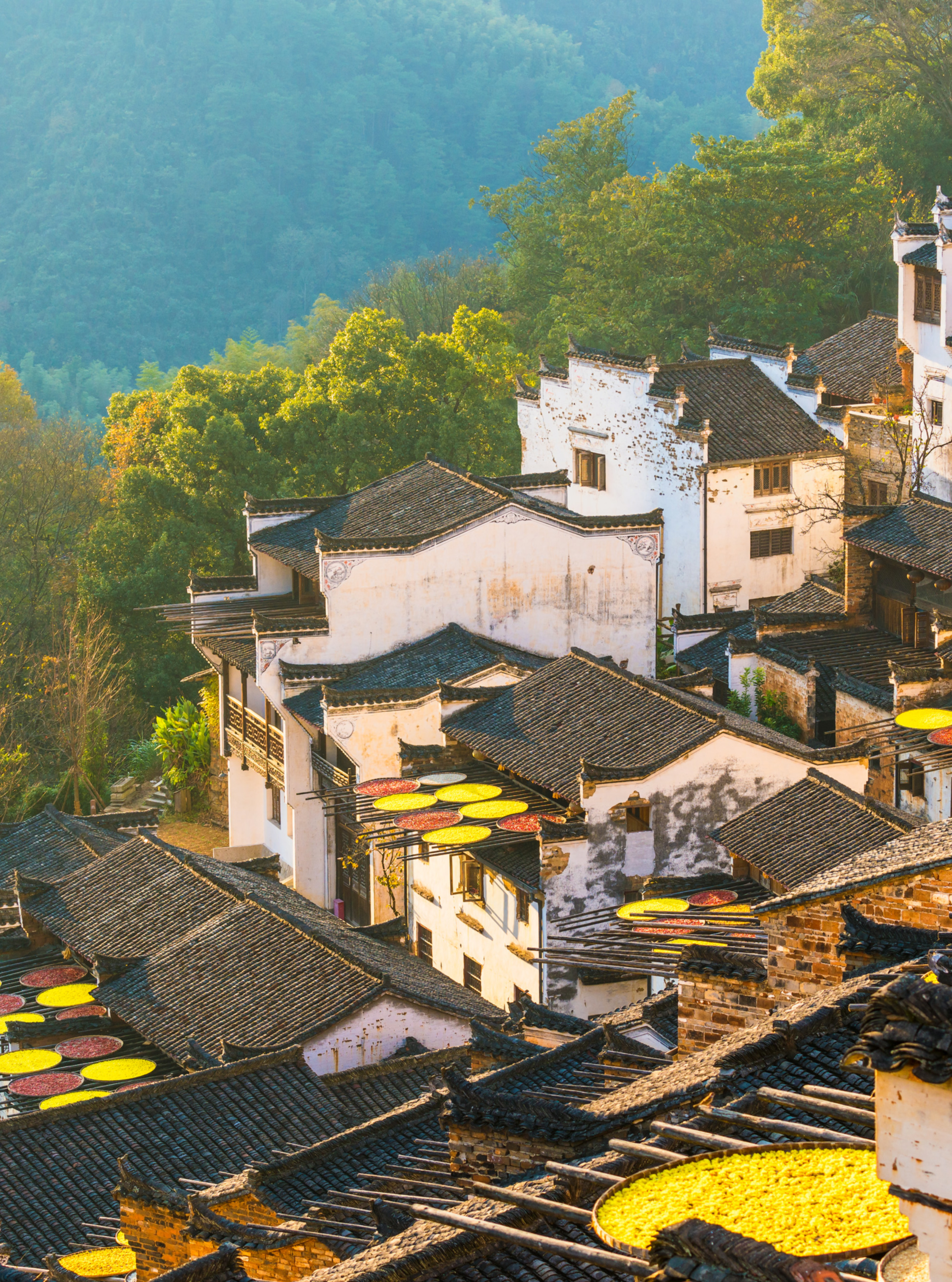
2025 Shangrao Travel Guide: Must-see attractions, popular food, hotels, transportation routes (updated in December)
1336 posts
2025 Wugong Mountain Travel Guide: Must-see attractions, popular food, hotels, transportation routes (updated in December)
96 posts
Post
More recommendations
Popular Trip Moments
I specially took a trip to Jiangxi to shoot this set of photos | Not Wuyuan, not Jingdezhen! This underrated city in Jiangxi is a true treasure|Fall in love at first sight | Traveling with kids in Fuzhou! 24-hour full guide to the hometown of talents, ancient village drifting | 24h Fun with Kids in Fuzhou! Unique Talents' Hometown Experiences + Amazing Live Performances | Breathtakingly Beautiful! The Only Ancient Bridge in China "Covered Entirely with Porcelain Tiles" | Zhugiao Ancient Village, Jinxi, Jiangxi Province | Canglang Mountain House in Zhuqiao Village, Jinxi, Jiangxi | Lu Xinxing Residence in Lufang Village, Jinxi, Jiangxi | "An ancient village without walls" in Fuzhou, Jiangxi | On New Year’s Day and New Year’s Eve, a 3 days and 2 nights provincial guide to Fuzhou, Jiangxi is arranged for you!
Recommended Attractions at Popular Destinations
Popular Attractions in Bangkok | Popular Attractions in Manila | Popular Attractions in Tokyo | Popular Attractions in Taipei | Popular Attractions in Hong Kong | Popular Attractions in Seoul | Popular Attractions in Kuala Lumpur | Popular Attractions in Los Angeles | Popular Attractions in Shanghai | Popular Attractions in New York | Popular Attractions in Shenzhen | Popular Attractions in Osaka | Popular Attractions in Singapore | Popular Attractions in London | Popular Attractions in Guangzhou | Popular Attractions in San Francisco | Popular Attractions in Beijing | Popular Attractions in Macau | Popular Attractions in Bali | Popular Attractions in Jakarta | Popular Attractions in Paris | Popular Attractions in Ho Chi Minh City | Popular Attractions in Istanbul | Popular Attractions in Phuket | Popular Attractions in Chicago | Popular Attractions in Seattle | Popular Attractions in Toronto | Popular Attractions in Orlando | Popular Attractions in Cebu | Popular Attractions in Chiang Mai
Popular Restaurants in Jinxi
余家饭庄 | 徐坊雅风休闲山庄 | 富芳酒家 | 季季红火锅(金源财富广场店) | 一品乐西饼屋 | 好心情西饼屋(金溪汇丰食品实体店) | 黄通华盛饭店 | 古茗(锦绣华城店) | DA DAN SI HAI FAN DIAN | 遵义羊肉粉馆 | Yujianshishang Restaurant | 大台北(学府路店) | 巴黎天使(秀谷西大道店) | 秦云老太婆摊摊面(金溪店) | 万方圆拌粉瓦罐汤(金溪象山花城店) | 金溪米饺店 | 果多果水果铺 | JIN JIN XIAO CHAO | XIAO PAN JIU LOU | Shangmatoutanzi Fish Restaurant | 裕家烘焙生日蛋糕(金溪县店) | 青春木炭烤肉(金溪店) | 好滋味黄焖鸡(秀谷中大道店) | 河源山乡土菜馆 | 赣领头羊 | Fuzhizunyuyangguan (jinxi) | 塔斯汀中国汉堡(商贸城店) | HANG ZHOU FENG WEI XIAO LONG BAO | 正新鸡排·炸鸡烧烤(金成店) | 港堡汉堡·炸鸡(新华都店)
Popular Ranked Lists
Popular Best Things to Do in Miluo | Popular Best Things to Do in Barkam | Top 50 Best Things to Do in Rio de Janeiro | Popular Luxury Hotels in Penang Island | Popular Best Things to Do in Mannheim | Popular Best Things to Do in Hepu | Top 50 Luxury Hotels in Hudson Valley | Top 50 Must-Visit Restaurants in Guangzhou | Popular Best Things to Do in Rimini | Popular Best Things to Do in Hurghada | Top 10 Luxury Hotels near Valencia Province | Top 50 Must-Visit Restaurants in Madrid | Popular Best Things to Do in Kassel | Popular Luxury Hotels in Molokai | Top 50 Must-Visit Restaurants in Sydney | Popular Best Things to Do in Amboseli | Top 50 Must-Visit Restaurants in Changsha | Top 50 Must-Visit Restaurants in Seattle | Top 50 Must-Visit Restaurants in New York | Popular Best Things to Do in Delphi | Popular Luxury Hotels in Windward Coast | Top 10 Luxury Hotels in Indiana Dunes National Lakeshore | Top 50 Must-Visit Restaurants in Xi'an | Top 20 Luxury Hotels in Antalya Coast | Top 50 Must-Visit Restaurants in Langkawi | Popular Best Things to Do in Balearic Islands | Popular Best Things to Do in Flam | Popular Best Things to Do in Como | Popular Luxury Hotels in West Maui | Popular Best Things to Do in Kemi
About
Payment methods
Our partners
Copyright © 2025 Trip.com Travel Singapore Pte. Ltd. All rights reserved
Site Operator: Trip.com Travel Singapore Pte. Ltd.
Site Operator: Trip.com Travel Singapore Pte. Ltd.